Inspired by “Grit” by Angela Duckworth, as recommended my VP at Land O’Lakes
Growing up, no one read to me or helped with homework—math facts were my responsibility alone. From first through third grade, I was labeled “behind average,” not because I lacked effort, but because of circumstances at home. My mother worked the second shift as a nurse, picking up extra hours whenever she could. My father, on the other hand, squandered what little we had on ill-fated “get rich quick schemes.” Paying the electricity bill and filling the tank in the yard for heat was a struggle. My dad called himself a farmer but we had a large garden and some chicken and turkeys then never turned a profit. You are looking at the only employee, along with my brother and sister.
My siblings and I were raised in a wild, unstructured environment—no rules, no routine, just the shifting demands of whatever our father was yelling about that day, the random times his loud truck was home. Living on eggshells barely describes it; it was more like running barefoot across razor-thin glass, or squeezed into pink cowboy boots two sizes too small. I desperately wanted to make him proud, even as I wrestled with fear and resentment. Those feelings can coexist, though as a child you don’t recognize their names. You simply keep pushing, striving to be the best kid you can be.
I picked the most beans in the garden, cleaned up endless piles of junk he dragged home, shovel chicken crap and volunteered—over and over—to feed those mean, towering turkeys. My father belittled and insulted my mother and the three of us kids constantly. From the start, I was determined to prove him wrong. I wasn’t the “worthless female” he so often called me, nor any of the other cruel names he hurled in anger.
Looking back, I suspect my father suffered from undiagnosed Ankylosing Spondylitis (AS) and depression—pains I now understand, having managed my own diagnosis with the help of doctors and a pain clinic. AS is incurable, and even with treatment, it’s one of the most painful diseases to endure. Depression, too, runs in families. I’ve been blessed to avoid any mental health issues, thank God but others in my family have not been so lucky. Knowing this provides context, not justification, for his actions. Was there kindness? Yes—there were days he took us swimming at the lake after work, or brought us candy bars from the gas station. He never locked us in the basement or anything so cruel. But the years of emotional abuse left a mark, fueling my drive to achieve.
I became fiercely focused, determined to excel at whatever I did. I needed to prove—perhaps to him, mostly to myself—that I could be the best.
The turning point came in fourth grade. I remember thinking, “This is ridiculous. I’m done letting other kids outperform me. I’ll figure this out, push my teacher to teach me, sneak books home if I have to. I will be the best.” And that’s what I did. I hid textbooks in my backpack, stayed up late re-reading lessons, and moved from “special needs” to “gifted” by the end of the year.
There was a reading challenge in our class: for every book we finished, we earned a paper scoop on the wall, building an ice cream cone. My cone stretched up past the ceiling. I questioned everything—asked, learned, persisted—until I understood, even the most difficult topics. I wasn’t the smartest in the class; I never have been. But no one would out work me.
My progress amazed my teacher so much she called both my parents in. I was terrified—I’d just completed the second half the handwriting book in a single night, against the rules. But instead of reprimanding me, she showed them my work: the improvement from the start of the year to now. She told them, in all her career, she’d never been prouder of a student’s growth in such a short time. She looked at me and asked, “What are you working toward?” Without hesitation, I answered, “I want to go to college and get a great job.” She smiled and said, “Keep working like this, and you will. People who work hard and never give up always succeed.” My parents beamed—no words of praise, then or anytime later but I caught the look. Maybe that silent pride drove me more than any compliment ever could.
Yes, old man—sit back and watch what this “worthless female” will accomplish. I remained polite and kind to him all his life, until his death at age 69, I’m not even sure why.
This is what grit means to me: the relentless pursuit of better, the refusal to be limited by circumstance or anyone’s opinion. My story is proof that determination can coexist with pain and that hard work, above all else, can change the course of a life.
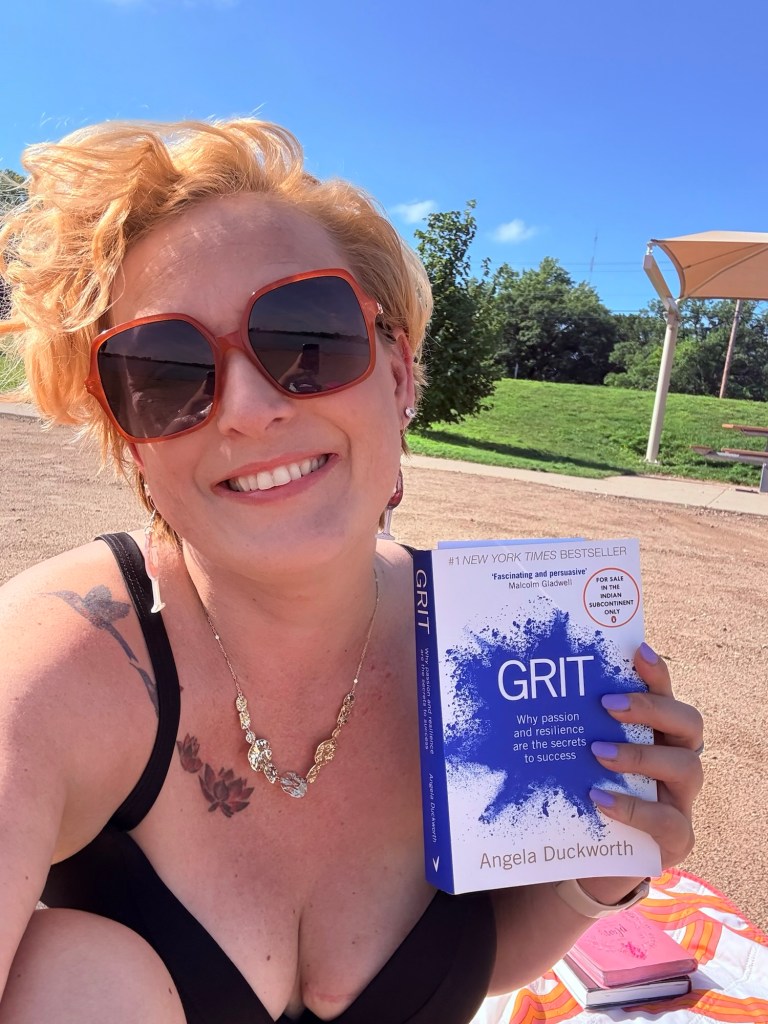
And yeah, this is me after being first in either side of my family to get a 4 year degree, then Masters. 8 or 9 promotions in corporate Ag, I lost count because I stopped doing things for my dad decades ago, thank goodness. But the grit remains.
 My Journey