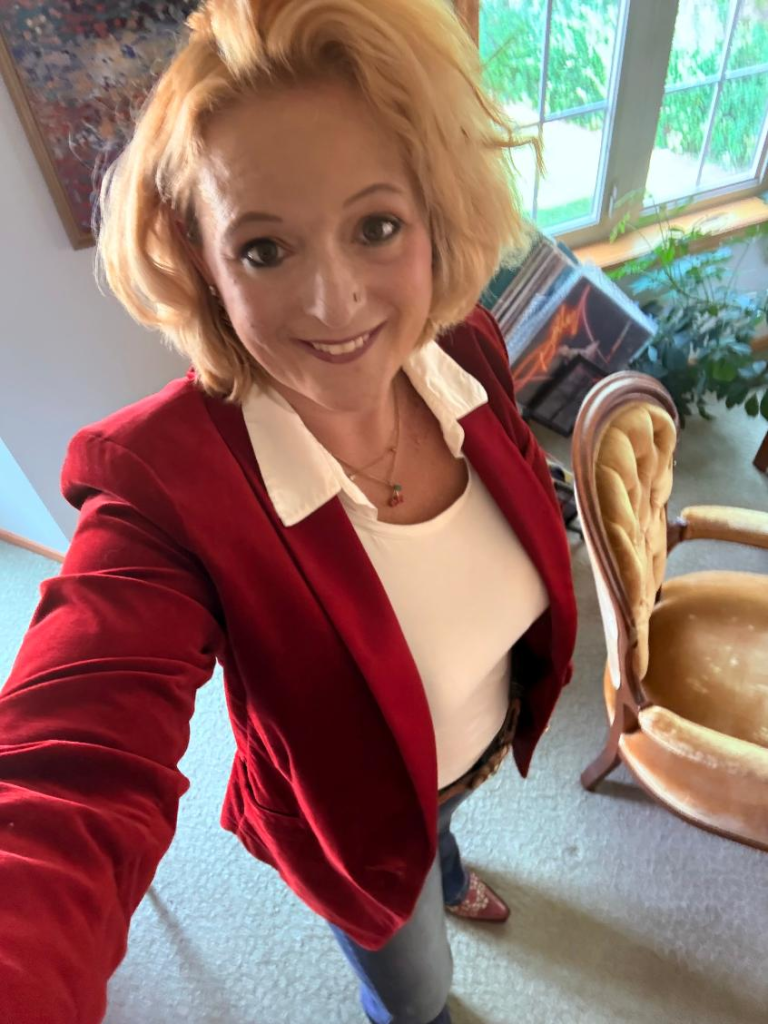
2026 has finally brought a sense of stability to my cancer treatment. I remain in remission — something I never take for granted — and after a long stretch of trial and error, my care team and I have landed on a combination of medications my body can tolerate.
Right now, I’m on Tamoxifen, Goserelin injections, and a half‑dose of Verzenio. It’s not the textbook “ideal” regimen for my cancer profile. The original plan was Goserelin, Exemestane, and Verzenio at the full 100 mg twice a day. But Exemestane was brutal. The muscle pain, nausea, and relentless fatigue made daily life almost impossible. I pushed through six months hoping my body would adjust, but it became clear the cost to my quality of life was too high. Switching to a less aggressive — but far more tolerable — plan was a hard decision, yet months later, I’m grateful I made it.
Goserelin prevents my body from producing estrogen, which my cancer feeds on. Verzenio is a targeted anti‑cancer medication originally designed for stage 4 patients, but research shows it can reduce recurrence risk for high‑risk stage 3 patients as well. Even at half the dose, it helps lower my recurrence risk from about 30% to roughly 25% in the near term. Tamoxifen is the most common breast cancer medication — less potent than Exemestane, but significantly more tolerable. I’ll be on Tamoxifen for ten years and Verzenio for five.
I’m also considering having my ovaries removed so I don’t need Goserelin injections for the next decade. The needle is enormous — definitely not a “flu shot” — and removing the organ that produces estrogen would eliminate the need for those injections. I meet with a surgeon in October to discuss this option, my Oncologist is suggesting this course of action.
Some of you may remember that my cancer port malfunctioned in 2023 and punctured my heart. The damage is permanent, but right now it shows no signs of worsening. Two blood clots remain in my heart, but they aren’t actively growing. I’m monitored by a Mayo Clinic cardiologist and take blood thinners twice a day to reduce the risk of further clotting. The silver lining is that my heart has been thoroughly evaluated by one of the best specialists, and aside from the port injury, I show no signs of underlying heart disease — a huge relief given my family history.
Radiation also caused permanent damage to my left lung. It will never improve. Between medication side effects, heart clots, and lung damage, I get out of breath easily — and that’s when my ankylosing spondylitis (AS) isn’t flaring and limiting my movement.
The long‑term reality is that my recurrence risk increases over time. The chance of cancer returning in my bones, brain, or liver rises from about 25% to 40% as the years go by. If it returns, it would be terminal, though treatments exist that can slow progression and add years depending on where it appears. Bone recurrence is the most treatable; liver or brain would be far more serious. I didn’t know any of this during active treatment, and honestly, I’m grateful — it would have been too much to process at the time.
I still deal with fatigue and body aches on my current medications, but they’re manageable. I can function. I can balance my AS symptoms with my cancer treatment. I can live my life again, not just endure it. I also have a non‑cancerous tumor in my right breast that needs to be removed so it doesn’t become cancerous. I meet with a different surgeon in October for that procedure.
AS itself has been stable thanks to a monthly biologic injection, but my degenerative disc disease has progressed. I have a fusion in C3/C4 in my neck, and it’s now suspected that I have a herniated disc caused by the stress of that fusion. Two additional discs are bulging. The neck pain has been one of the most challenging symptoms of the past three months. I have an injection scheduled in two weeks to help numb the pain, and I’m genuinely excited for the relief.
Because of all these realities, I’m currently on leave from work. After my surgeries and neck injection, I’ll reassess my condition with my doctors. I’m deeply grateful for the long‑term disability benefits I’ve paid into for 22 years. Being a single mom on a reduced income (66%) has been an adjustment, but one I’m willing to make if it adds years — and quality — to my life.
Stability doesn’t mean the journey is easy. But it does mean I can breathe a little deeper, move a little more freely, and trust that I’m finding my way forward. I try hard to live fully on my good days. I’m scheduled to go up in a hot air balloon tomorrow. I’m heading to the Ordway next week. I’m enjoying as many dates as possible with my wonderful boyfriend, Brad, whenever his nursing schedule and my body allow. And the rest of my time is dedicated to my children, who are growing far too quickly.
Life is not easy, but it is good. God is good, and I am blessed. Few people get the clarity of what is truly important and live life to the fullest until they retire, if then. I’m clear on the value of everyday.